Three years ago, I received an email from the director of the Sachs Museum at Missouri Botanical Garden, asking me if I would like to help create an exhibition on plants and scent. Of course, I jumped on the opportunity. MoBot is one of my favorite places, and working on this exhibition was a dream.
Over the ensuing years, fellow St. Louis perfumer Weston Adam and myself got to visit the garden after hours, smell all types of flowers and plants, and replicate those scents, along with consulting on telling the story of how plants become perfume. The exhibition has been getting rave reviews, displaying not only the scents we (and Dr. Spyros Drosopoulos of Baruti Perfumes) created, but also scent molecules and extractions of different flowers. It has been both rewarding and reinvigorating after ten years of working in scent.

However, we will talk about that reinvigoration another time. First and foremost, I highly encourage you to visit the Sachs Museum at Missouri Botanical Garden before the exhibition ends in March 2026. Even after three years of working on it, it is still a thrill every time I attend.
Secondly, I want to talk about the four scents I created. I also encourage you to visit Weston’s website and follow his perfume line, Phronema Perfumes, which are truly outstanding.
However, let’s discuss what went into creating the four flowers I have recreated for the exhibition and will be selling in cooperation with the Sachs Museum in a limited edition release.
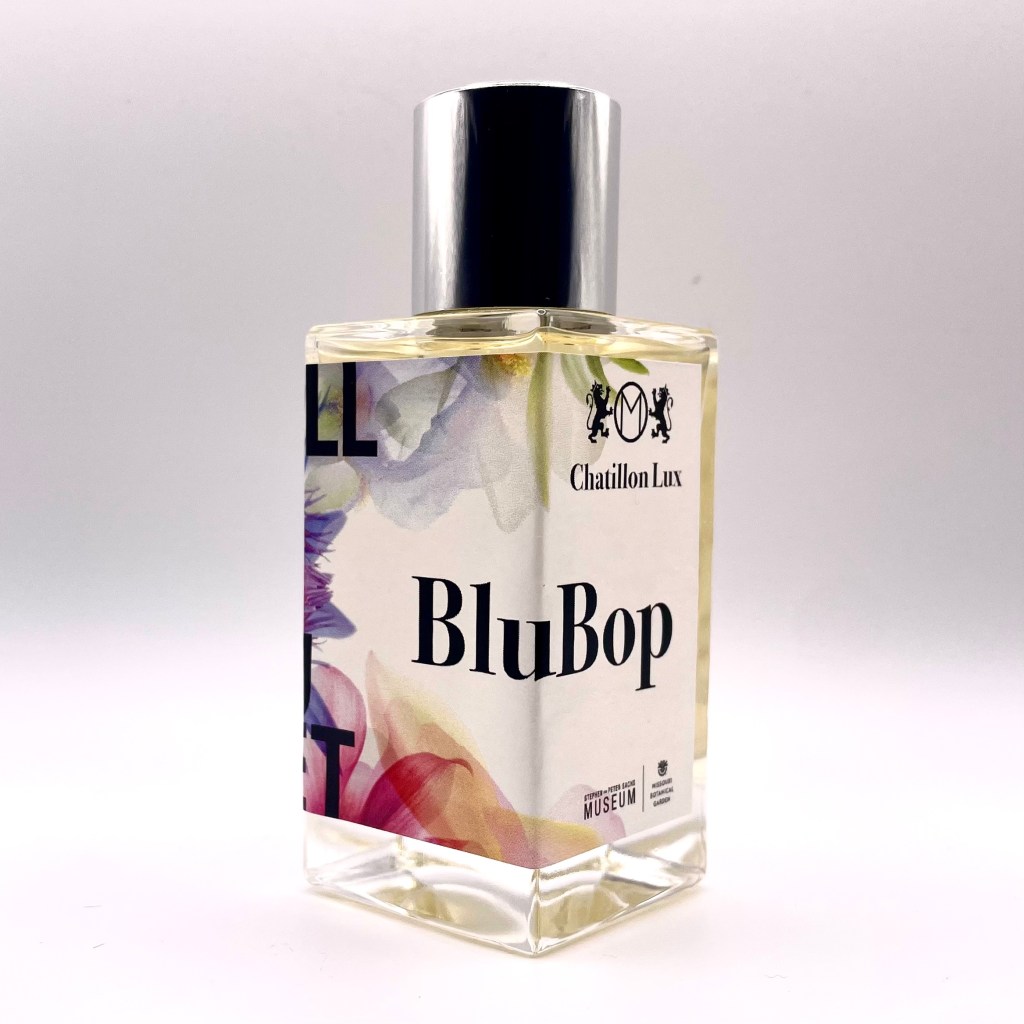
BluBop Water Lily
One of the first experiences in working on this exhibition was early in the morning. I got to visit the garden at sunrise, throw on a pair of waders, and go into the picturesque water lily pools with the horticulturist team as they trimmed them and cared for them, allowing me to smell all of the specimens at the time.
While many were very traditional, with the citronellol–forward water lily scent that many will recognize. However, one really caught my attention, the tropical BluBop flower. It smelled like tropical fruits, pineapple and passionfruit, combined with the scent of ionones, the type of aroma molecules present in iris and violet.
The composition includes many molecules common in purple flowers: ionones, benzyl alcohol, benzyl acetate, linalool and the like, along with Paradisamide and a natural pineapple extract to represent the fruity notes, along with an orris root tincture, ethylene brassylate musk, and the watery green notes of Isoraldiene 95 and cis-3-hexanol to enhance both the iris-type facets as well as the watery green note of a water lily.

Ixora
This flower, called the geranium of the tropics, was a true delight to smell in the Climatron. It doesn’t hurt that it’s also a strikingly beautiful flower. It was a tough cookie to crack because it had some facets that I smelled in several tropical flowers and had a tough time identifying. Eventually, I determined there were heavy doses of molecules from the cyclopentalone family, which have a sweet, creamy, custardy and almost caramel-like scent.
From there, things really came together quickly, with the rose/geranium-type molecules like phenyl ethyl alcohol and phenyl acetaldehyde dimethyl acetal along with the spicy nuances of caryophyllene beta, eugenol and amyl cinnamic aldehyde. Throw in a few standard floral builders like linalool and ethyl linalool, along with a finishing touch of coumarin to balance out the cyclopentalones, the Ixoral flower because what you will smell here.

Wooly Lavender
Found in the newly opened Arid House, the wooly lavender plant seemed like it would be a standard lavender, but it was so much more. After crushing it to smell the inside of the pods, the standard lavender faire of linalool and linalyl acetate became overtaken by the camphoric notes that are usually mere bystanders in a lavender flower, and especially by the creamy and spicy note of coumarin. It almost because an old-school fougere minus the oakmoss. This flower is made for lavender lovers who seek out something in the family that’s a little bit different.
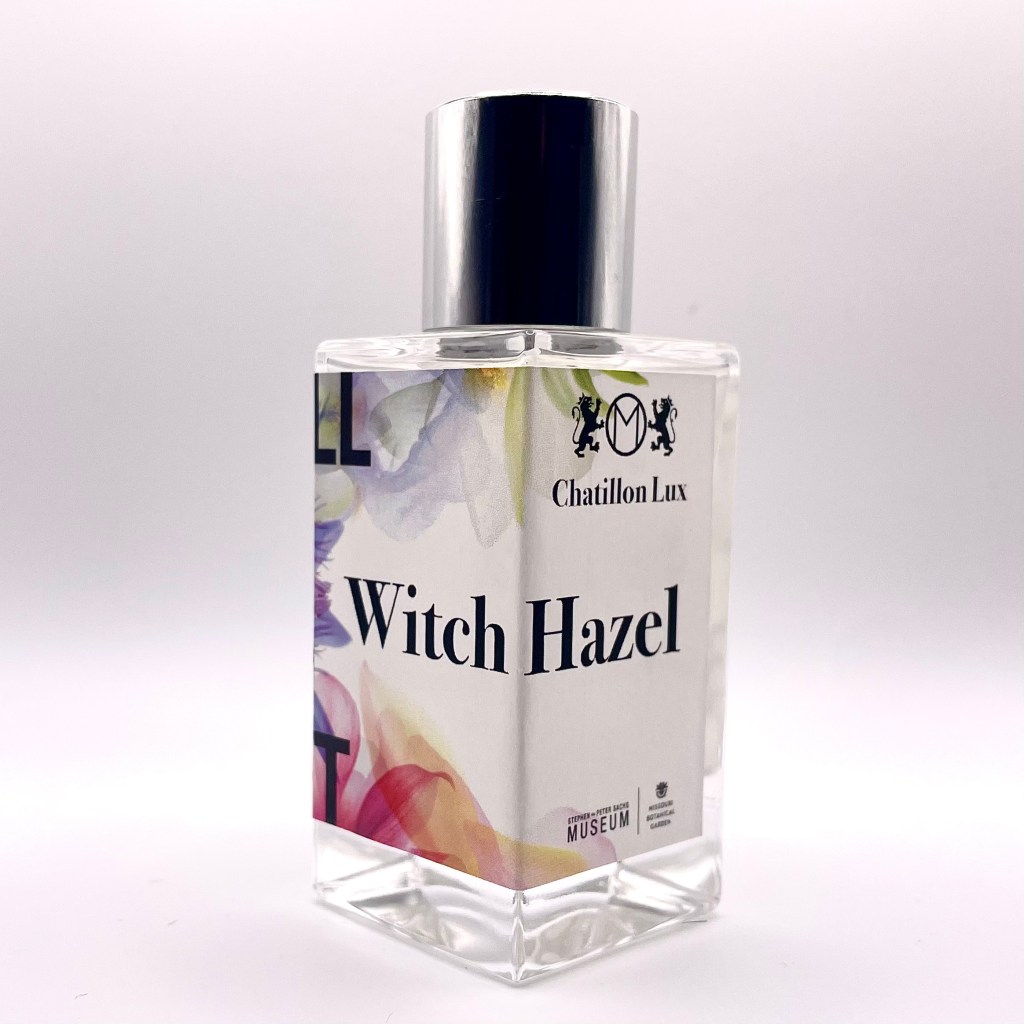
Witch Hazel Tree
Finally, in the final months before the exhibition opened, a witch hazel tree on the grounds started to bloom, releasing a citrus-forward white flower scent that was especially intoxicating. It is an Ozarks witch hazel tree, which is especially apropos since I grew up in the Ozark Mountains.
The top notes of this flower feature limonene, citral and the tangy, fruity note of delta damascone and hexyl acetate. Underneath that I used a somewhat unique balance of floral builders, including the aforementioned phenyl ethyl alcohol and phenyl acetaldehyde dimethyl acetal (although in this instance, I used the lighter, fresher PADMA in a much higher amount), along with linalool, Indolarome, geraniol, alpha pinene, caryophyllene beta, citronellol, benzyl acetate and geranyl acetate.
However, there was a certain zest to the scent that I wanted to pull out with a tiny microdose of methyl salicylate, a wintergreen-type note that I love using in imperceptible amounts due to how it interacts with citrus notes. I then used a tiny bit of raspberry ketone to fill out the fruitiness of the scent and employed Zenolide, a musk that acts almost as a top note to emphasize a zesty apple-type punch.
How You Can Smell These
First and foremost, I once again urge you to visit the Sachs Museum to experience the exhibition in person and to see these flowers for yourself. However, both Weston and I will be selling these scents on our respective websites. You will be able to purchase all four of my creations on both the Chatillon Lux website as well as the Maher Olfactive website beginning on July 11.
 Scent Notes by Shawn Maher