One of my favorite parts of releasing a new perfume (after the actual composition process) is writing my Scent Notes column. I love pulling the curtain back and explaining my creative process. I believe in giving people credit for being intelligent information-seekers rather than trying to build a shroud of mystery. In all the art I love, there’s nothing that really enhances my appreciation than getting a direct conduit into the artist’s creative process and inspirations.
However, now that I have split the Chatillon Lux Parfums line into a new luxury house that caters to my desire to stretch my creativity to its fullest, Maher Olfactive, I wanted to create a place that I could not only keep my Scent Notes columns for both houses in one place, but also allows more more random musings about the world of perfumery. That will be both written and, hopefully in the near future, video blogs.
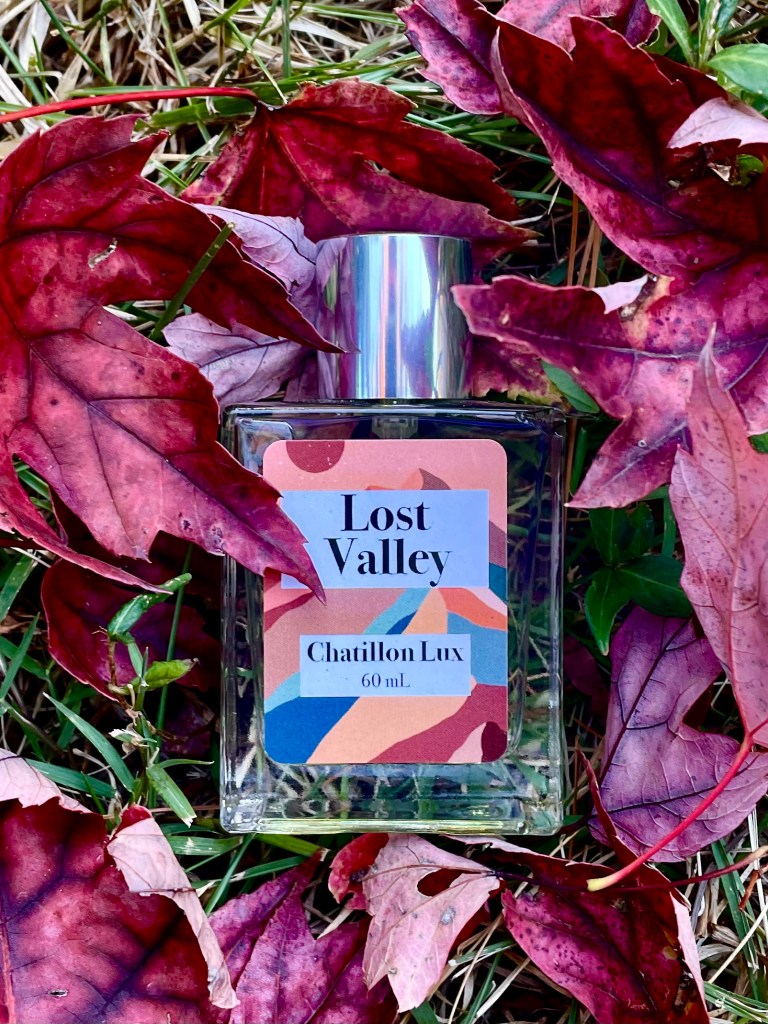
This composition was inspired by a local area known Lost Valley, but it could be any place on a radiant day where the only goal is to lose yourself in the intoxicating scent of blooming suckles. It’s a scent that I associate with pure bliss, a day completely devoid of accomplishment, but most definitely not a day wasted.
Lost Valley contains notes of honeysuckle, petitgrain, lemongrass, jasmine and vetiver. It encompasses florals in the field and the grassy undertones wafting up from each footstep.
The honeysuckle accord is the highlight of this fragrance, and it has many commonalities with a rose accord, but instead of being rich and throaty with jammy undertones, it is silky and honeyed. That means it is built around the pink floral note of phenyl ethyl alcohol along with the common floral builder of linalool, but with a few materials that create sparkle: benzyl salicylate, helional, alpha damascone, perenat and hexyl salicylate. There is a gravity added with the green richness of linden blossom absolute, South African geranium and citronellol, which is used in a higher dose than a regular rose accord. Finally, methyl anthranilate gives it a richness that is also found in orange blossoms, which have many similarities to honeysuckle.
I chose to pair it with lemongrass essential oil to add a little bit to the light, crisp fruitiness as well as the association of serenity that comes with the note very often used in spas. And a touch of blue eucalyptus essential oil both contributes to the crisp dewiness as well as the spa connotation.
Underneath that, a jasmine sambac absolute pulls out the rich methyl anthranilate aspect of honeysuckle while a big dose of Hedione adds to the jasmine feeling while creating some airiness to the composition.
To add to the airiness and make things feel even more hazy and dream-like is a musk called Celestolide, which is perfect for this application. I also used Edenolide, also known as Applelide, which is apropos since it adds a crisp apple feeling to the top note as well as a bit of warmth and creaminess to the scent’s undertones.
Finally, I used a Haitian vetiver because it is, to me, the most grassy vetiver, enhanced by the terpenic, grapefruit-tinged Vetikone, a vetiver material that helps it blend well with the rest of the composition. This is further enhanced by Nectaryl, which cuts the sharp edges of Vetikone.
Three years ago, I received an email from the director of the Sachs Museum at Missouri Botanical Garden, asking me if I would like to help create an exhibition on plants and scent. Of course, I jumped on the opportunity. MoBot is one of my favorite places, and working on this exhibition was a dream.
Over the ensuing years, fellow St. Louis perfumer Weston Adam and myself got to visit the garden after hours, smell all types of flowers and plants, and replicate those scents, along with consulting on telling the story of how plants become perfume. The exhibition has been getting rave reviews, displaying not only the scents we (and Dr. Spyros Drosopoulos of Baruti Perfumes) created, but also scent molecules and extractions of different flowers. It has been both rewarding and reinvigorating after ten years of working in scent.
However, we will talk about that reinvigoration another time. First and foremost, I highly encourage you to visit the Sachs Museum at Missouri Botanical Garden before the exhibition ends in March 2026. Even after three years of working on it, it is still a thrill every time I attend.
Secondly, I want to talk about the four scents I created. I also encourage you to visit Weston’s website and follow his perfume line, Phronema Perfumes, which are truly outstanding.
However, let’s discuss what went into creating the four flowers I have recreated for the exhibition and will be selling in cooperation with the Sachs Museum in a limited edition release.
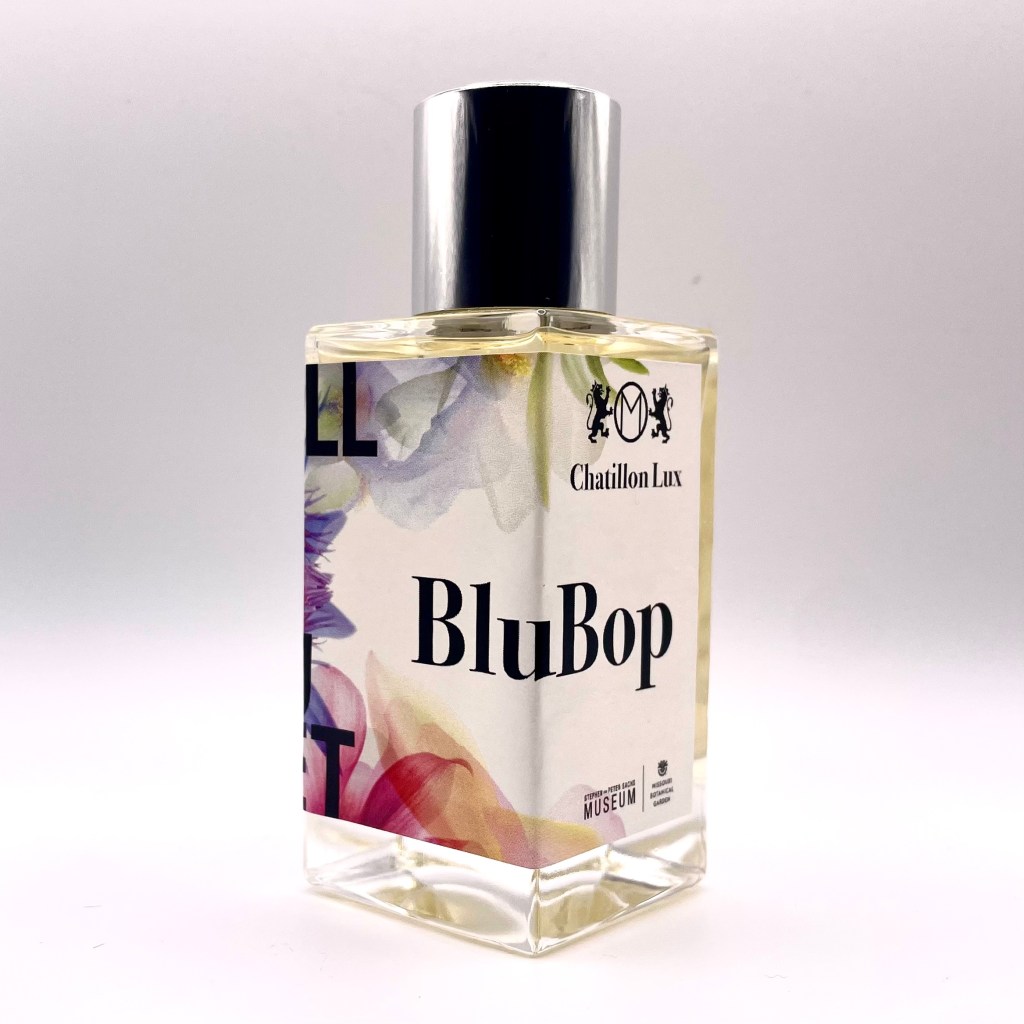
BluBop Water Lily
One of the first experiences in working on this exhibition was early in the morning. I got to visit the garden at sunrise, throw on a pair of waders, and go into the picturesque water lily pools with the horticulturist team as they trimmed them and cared for them, allowing me to smell all of the specimens at the time.
While many were very traditional, with the citronellol–forward water lily scent that many will recognize. However, one really caught my attention, the tropical BluBop flower. It smelled like tropical fruits, pineapple and passionfruit, combined with the scent of ionones, the type of aroma molecules present in iris and violet.
The composition includes many molecules common in purple flowers: ionones, benzyl alcohol, benzyl acetate, linalool and the like, along with Paradisamide and a natural pineapple extract to represent the fruity notes, along with an orris root tincture, ethylene brassylate musk, and the watery green notes of Isoraldiene 95 and cis-3-hexanol to enhance both the iris-type facets as well as the watery green note of a water lily.
Ixora
This flower, called the geranium of the tropics, was a true delight to smell in the Climatron. It doesn’t hurt that it’s also a strikingly beautiful flower. It was a tough cookie to crack because it had some facets that I smelled in several tropical flowers and had a tough time identifying. Eventually, I determined there were heavy doses of molecules from the cyclopentalone family, which have a sweet, creamy, custardy and almost caramel-like scent.
From there, things really came together quickly, with the rose/geranium-type molecules like phenyl ethyl alcohol and phenyl acetaldehyde dimethyl acetal along with the spicy nuances of caryophyllene beta, eugenol and amyl cinnamic aldehyde. Throw in a few standard floral builders like linalool and ethyl linalool, along with a finishing touch of coumarin to balance out the cyclopentalones, the Ixoral flower because what you will smell here.
Wooly Lavender
Found in the newly opened Arid House, the wooly lavender plant seemed like it would be a standard lavender, but it was so much more. After crushing it to smell the inside of the pods, the standard lavender faire of linalool and linalyl acetate became overtaken by the camphoric notes that are usually mere bystanders in a lavender flower, and especially by the creamy and spicy note of coumarin. It almost because an old-school fougere minus the oakmoss. This flower is made for lavender lovers who seek out something in the family that’s a little bit different.
Witch Hazel Tree
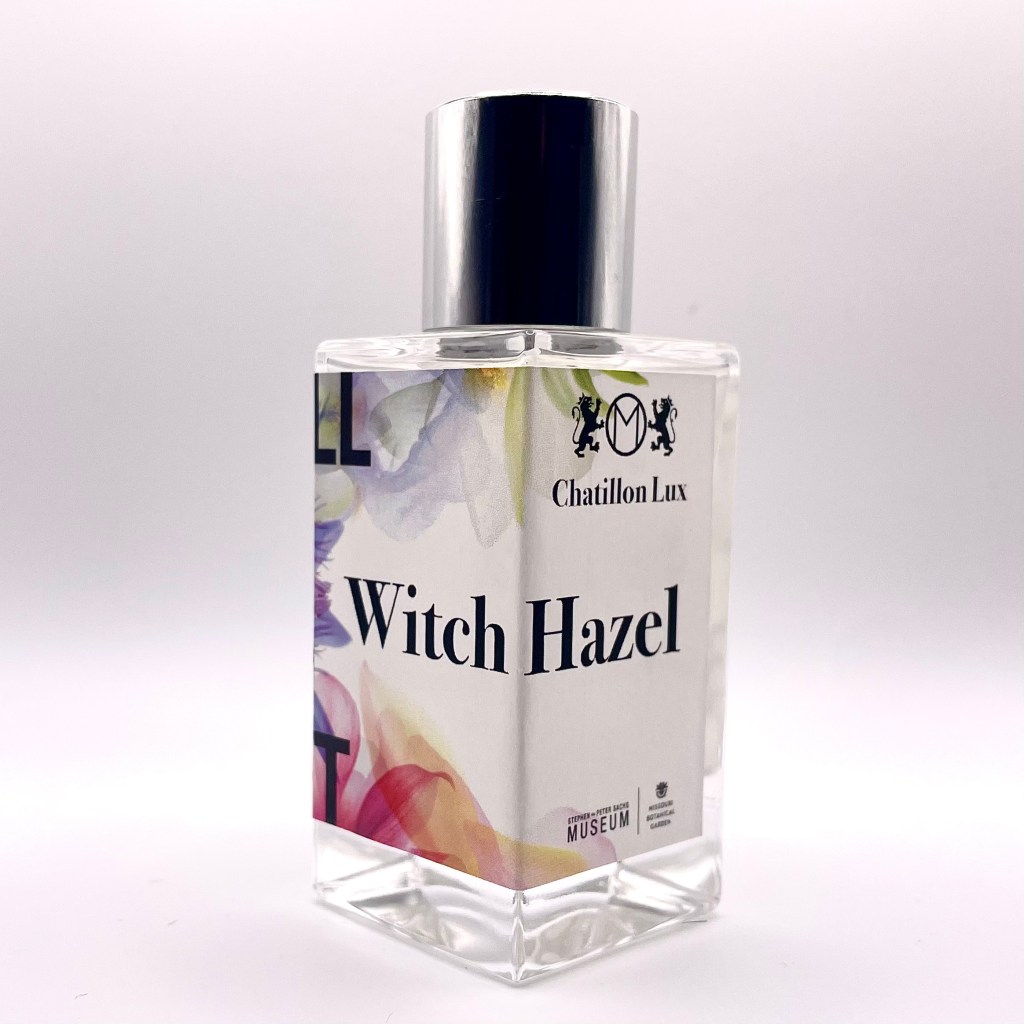
Finally, in the final months before the exhibition opened, a witch hazel tree on the grounds started to bloom, releasing a citrus-forward white flower scent that was especially intoxicating. It is an Ozarks witch hazel tree, which is especially apropos since I grew up in the Ozark Mountains.
The top notes of this flower feature limonene, citral and the tangy, fruity note of delta damascone and hexyl acetate. Underneath that I used a somewhat unique balance of floral builders, including the aforementioned phenyl ethyl alcohol and phenyl acetaldehyde dimethyl acetal (although in this instance, I used the lighter, fresher PADMA in a much higher amount), along with linalool, Indolarome, geraniol, alpha pinene, caryophyllene beta, citronellol, benzyl acetate and geranyl acetate.
However, there was a certain zest to the scent that I wanted to pull out with a tiny microdose of methyl salicylate, a wintergreen-type note that I love using in imperceptible amounts due to how it interacts with citrus notes. I then used a tiny bit of raspberry ketone to fill out the fruitiness of the scent and employed Zenolide, a musk that acts almost as a top note to emphasize a zesty apple-type punch.
How You Can Smell These
First and foremost, I once again urge you to visit the Sachs Museum to experience the exhibition in person and to see these flowers for yourself. However, both Weston and I will be selling these scents on our respective websites. You will be able to purchase all four of my creations on both the Chatillon Lux website as well as the Maher Olfactive website beginning on July 11.
In the Climatron at the Missouri Botanical Gardens, you never know what you will find in bloom at any point. And even then, the scent of a flower can change depending on its stage in the cycle. Recently, I had the pleasure to visit a variety of gardenia from Mexico throughout the stages of its lifecycle.
As it opened up, we enjoyed the tartness of its top notes backed by its floral fullness, belied by a creamy sweetness underneath. However, as time passed, the almost gourmand sweetness found underneath swelled to a crescendo just before the flowers withered and died.
It made me recall the word “envoi,” which is a statement of purpose, a summation, a denouement before the end of a poem. Joyce Kilmer wrote that “I shall never see a poem as lovely as a tree.” However, this gardenia could be seen as a poem of life, and throughout nature, in the autumnal season, beauty and splendor are often at its height, at its most sweet, right before it concedes to the winter season.
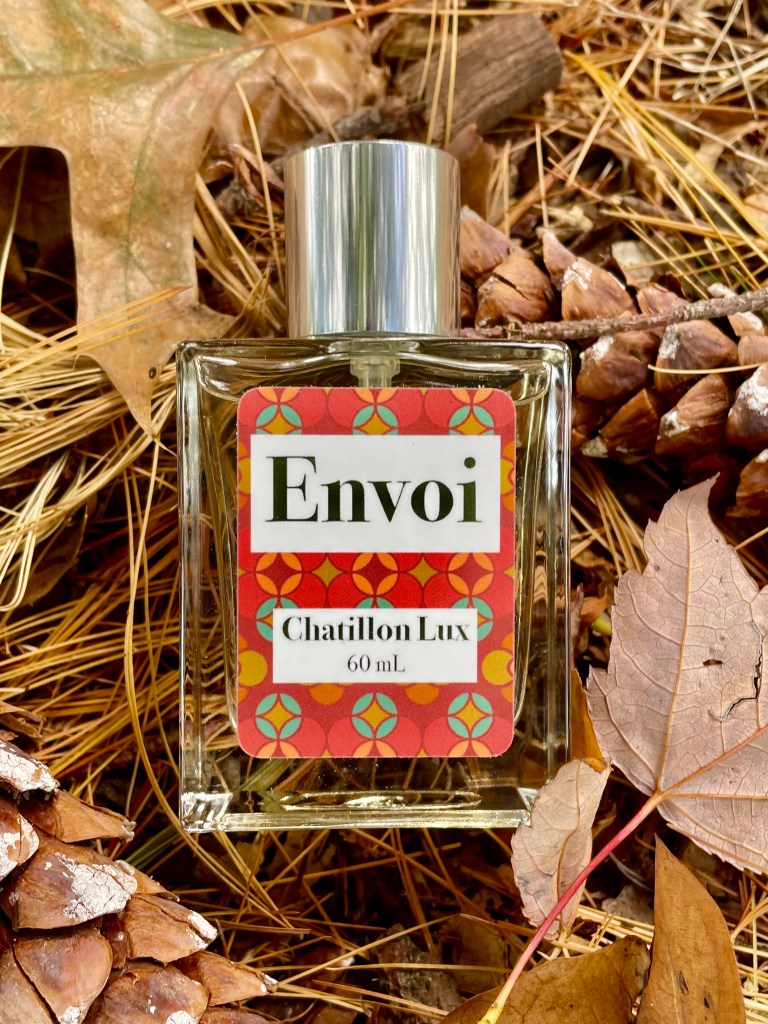
Autumn is the envoi of nature’s poem. And with that in mind, I developed Envoi Eau de Toilette for Chatillon Lux.
The Sweet Cream and Subtle Spice of the Gardenia
Using a GCMS headspace analysis of a gardenia, I determined some of the elements that provided that creamy, custardy undertone of the gardenia that became the hallmark of the scent in its final days. Those included various cyclopentalone isomers, which is sweet and creamy with just the slightest hint of caramel underneath.
There were also some spices in there, nominally hexyl cinnamic aldehyde, beta caryophyllene (an allspice type note) and eugenol (a nutmeg/clove type note). I brought the spices up a little bit more forward to create more balance as I built out the support cast, while also including the more subdued top notes of linalyl acetate (the main component in bergamot), methyl phenylacetate (like a honeyed floral note of rose), methyl benzoate (found prominently in tuberose) and other floral builders that play a smaller supporting role.
Finally, I used methyl diantilis, which does not appear in the GCMS, but is a note that is the soft, floral sister to eugenol, as well as the smallest touches of iso butavan, which is vanillic but not necessarily the smell of vanilla, and a tiny microdose coffee bean essential oil. These three give some texture to the sweetness and help to mimic what I smelled in the air.
Airy and Semi-Transparent Patchouli and Cedarwood
To contrast the sweet creaminess of the gardenia accord, as well as to complement its spiciness, patchouli and cedarwood were immediate choices for me. However, I did not want to let them get too heavy, as the gardenia accord was heavy enough as is. Instead, I made them light and airy to provide the proper contrast and juxtaposition.
For the patchouli accord, I chose a light-aged patchouli to help it stand out, but I used this in a very small dose. Instead, the accord mainly consists of a very modern patchouli-type note, Clearwood, something recognizable in many fragrances during this modern-day patchouli renaissance. This helped lift everything and keep it from weighing down on the skin too heavily.
Additionally, instead of a red, wet cedarwood note, I went with one that mainly consists of Iso E Super, which needs no introduction, with just a hint of cedrol. This achieves all the texture that I wanted to provide this scent, but without any of the unnecessary weight.
The Final Touches
After those building blocks, I filled in the gaps with a couple other notes. The first of which is bitter almond, which is the combination of marzipan and cherry, kind of reminiscent of Mr. Pibb or his more-educated cousin, Dr. Pepper. This accord was used sparingly, simply to add in a bit more pep to the sweetness of the gardenia accord, helping it to feel more diverse and less monolithic.
Additionally, I used a couple musks that are great for both longevity and also to provide an utter radiance to the scent. Exaltone and Exaltolide are both similar, with just a touch of Exaltone going a long way, with the less-heavy Exaltolide picking up the torch. The notes themselves are sweet, but they help the scent explode out of the sprayer, giving buoyancy to a thicker composition.
Envoi Eau de Toilette will be released on October 16 via ChatillonLux.com, with samples and full bottles available. Until then, all orders $30 and more from ChatillonLux.com will receive a free sample.
In a new video series, I will have some informal chats about various big-picture topics in perfumery. This episode is one that goes deep into one of my favorite materials, vetiver. In future videos, I’ll discuss more materials, misconceptions, hot topics and the art of perfumery. (click the post to see the video)
When I began working on this composition well over a year ago, I knew what I wanted to achieve in perhaps vaguely than how I have approached other compositions in the past. I knew I wanted to feature tuberose with an accord that features the sweet, bubble-gummy aspects with the minty facets serving as an undertone, backed up by the dewy depth of hyacinth.
Additionally, I wanted to use a traditional chypre structure…well, I began with more of a traditional fougére structure that evolved into a chypre when I decided that the lavender absolute was not working and that labdanum would play better with the rich, deep mysterious undertones that I was seeking.
Speaking of those rich, deep and mysterious undertones, I had a feeling that I wanted to evoke, one that I felt while reading the third of T.S. Eliot’s Four Quartets, “The Dry Salvages.” And as I am always obligated to point out, that is fellow St. Louisan T.S. Eliot. In that poem, there was a snippet, “…into the wind’s tail, where the fog cowers? Like the past, to have no destination. For a haul that will not bear examination.”
I imagined an opening within a dense forest where the fog cowers, a place difficult to reach, thick with undergrowth, rich with moss and surrounded by proud coniferous trees. It is seen through a gauzy veil of fog, experienced not directly, but through this filter.
So I created the tuberose accord that I sought, heavy with methyl anthranilate, the grapey sweetness that is a main culprit in the bubble gum nature of tuberose. It of course also contains benzyl benzoate, which gives it the minty texture, with just a microdose of wintergreen methyl salicylate. That is combined with methyl tuberate and evened out with the lactonic, peachy gamma decalactone and just a hint if dimethyl benzyl carbinyl butyrate, one of my favorite materials, a stone fruit note that is outstanding in many accords, but especially so in this one.
The hyacinth note is similar to a jasmine accord in its use of benzyl acetate, benzyl alcohol, hexyl cinnamaldehyde, phenyl ethyl alcohol and eugenol. However, its dewy green freshness comes from cis 3 hexanol, which is rich and a very deep green. There is also a sweet, wine note of damascene beta that serves both floral notes well.
Finally, the green note of linden blossom absolute is the bridge between the florals and the first of two notes that really add a juxtaposition that sets this perfume apart: fir balsam absolute. It’s rich, sappy nature is apparent from the first spray and on through the drydown. It’s not a needle, Douglas fir note. It’s a freshly cut tree sap note, one that pairs outstandingly with labdanum absolute and benzoin absolute to fit into a traditional chypre structure, along with oakmoss absolute, but to give it a fresh, nuanced reimaging that stays within the genre but pushes the borders.
To give the spice that a chypre requires, I used West Indies bay leaf essential oil, something that you might find in a bay rum, but a material heavy in clovey eugenol. One that keeps the sappy, resinous notes from becoming overpowering. That spice is enhanced and bridged to the oakmoss note by the piquant green leather of isobutyl quinoline and to the resinous notes by styrax essential oil, a balsamic note that has just a touch of cinnamon.
Finally, the fog. I used a combination of musks to help give this a fuzzy, warm and seamless feel. One is isomuscone, an ideal musk for chypres and fougéres, with some powdery and animalic undertones but overall more of a vibe than a note. This is counterbalanced with ethylene brassylate, a musk that elevates floral notes but rounds the edges, preventing them from being piercing and helping to mix them evenly into the blend.
That final composition is one that was well worth the nearly 18 months of development that went into it. I have used the chypre structure many times, but this is the closest I have ever come (and may ever come) to a classical structure. However, it is distinctly my own because I wanted to create something that feels unique but entirely wearable.
This Scent Notes column was a long time coming, as I got a little bogged down by life, but I have been thrilled to hear all the amazing feedback from those who have worn it and loved it. I am proud to have shared this creation, which has become a personal favorite of mine to wear.
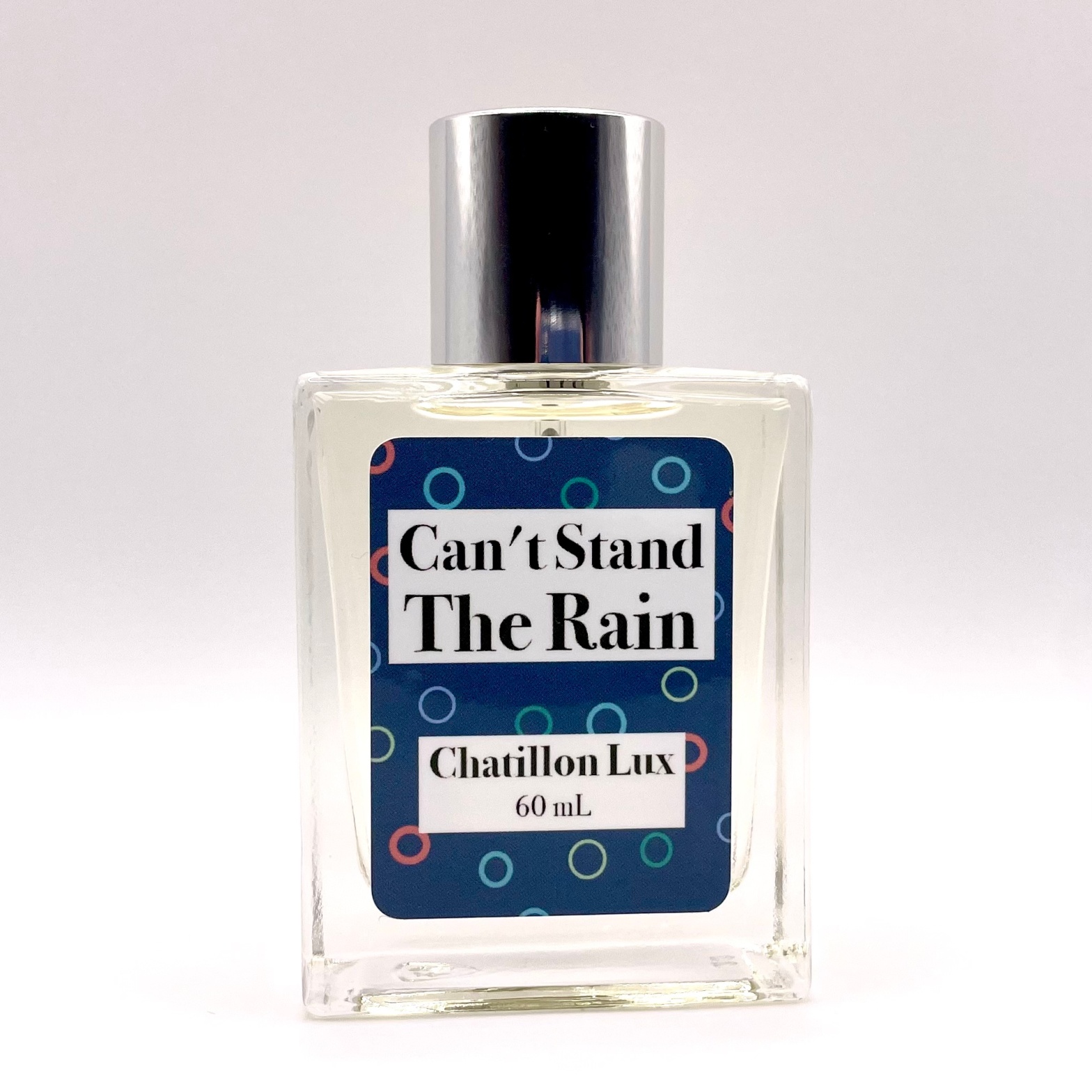
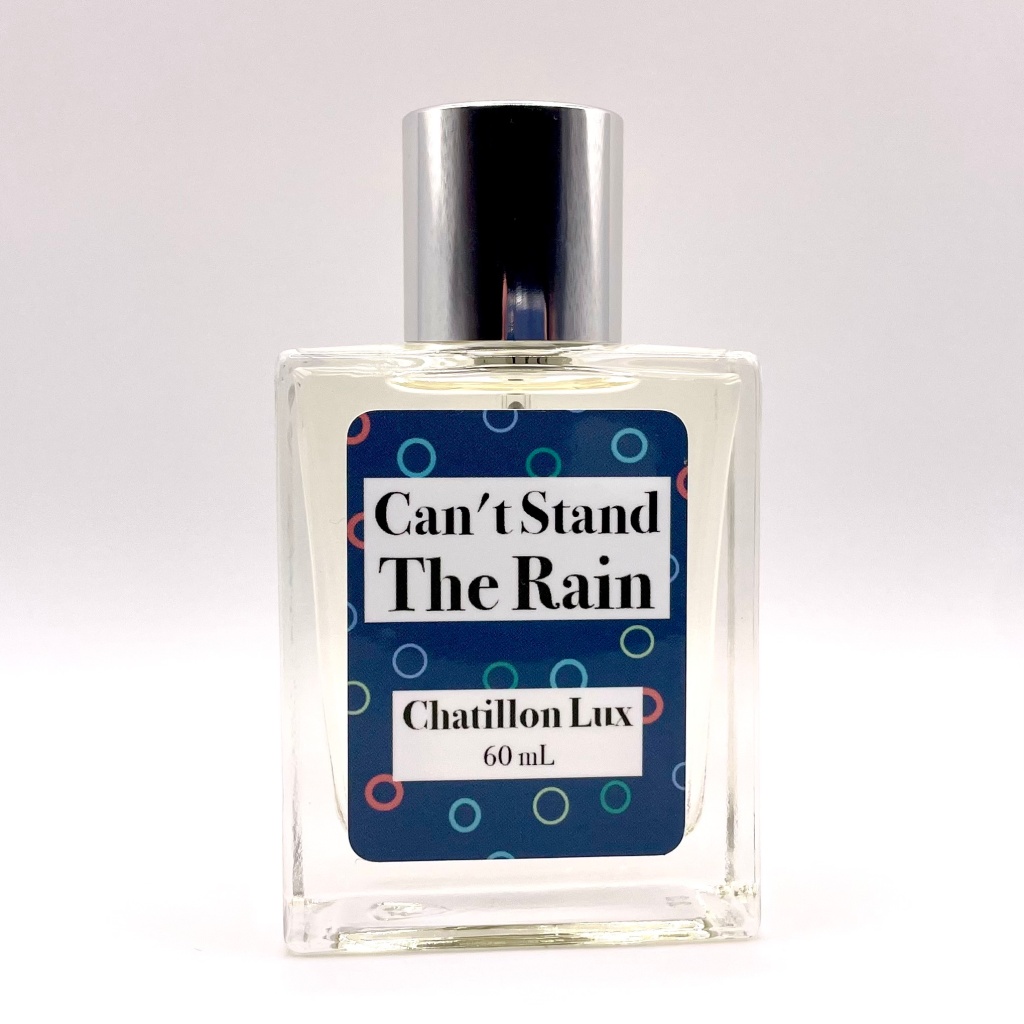
Once again, I’ve come up with a musically inspired scent. This time my inspiration was from fellow St. Louisan Ann Peebles and her song, “Can’t Stand the Rain.” Give it a listen. It’s outstanding. In this interpretation, I wanted to create a scent that is sitting at an open window as the last few drops of rainfall while the sun comes out and begins to dry everything out. It’s coming out alongside Treget on May 19.
As with Admiral, I don’t want to create yet another aquatic scent in the style that’s been beaten to death at this point. Instead, this is a freshwater scent, one of rain, with bright citrus and coriander shining through, all the while a rich cedarwood, incense and oakmoss base supports everything without taking it over. The notes are petitgrain, lemongrass, jasmine, coriander, rain, cedar wood, myrrh, labdanum and oakmoss.
In the top notes, I used a bitter orange petitgrain bigarade essential oil, one of my favorite scents. This is supported by a vibrant but not overly spicy coriander essential oil, one that really helps lift up the petitgrain note. However, underneath it, I use a more rich lemongrass essential oil. There’s also a touch of sweet orange essential oil, as well, in order to round everything out and help it meld with the rain water note.
Additionally, a more traditional jasmine accord fits in outstandingly with the rain water note. It’s heaver on the sweet purple aspects like benzyl acetate, benzyl alcohol and beta damascone, while being lighter on the cinnamic spice facets and pink flower phenylethyl alcohol. It’s made a little bit more airy with Hedione and it’s slightly fruitier Hedione HC cousin, while a microdose of pyroprunat gives it a more round sweetness with it’s prunish, rasiny note.
Finally, the rainwater accord I keep mentioning. It’s meant to be fresh and totally devoid of the traditional dhydromyrcenol and Calone. The jasmine accord plays a dual role, helping to shape this accord from the outside, while Aquamate is the star material as it has a grapefruit-ish top note that disappears into the petitgrain and coriander, leaving its freshwater essence to shine in this accord. Finally, Helional gives is a shimmery, sparkly finish, like a droplet in the sun, beaded up on a leaf.
Underneath it all, I use the more modern Veramoss for the oakmoss accord, which fits in better with the red cedar note (of which I use Atlas cedar, which is light and delicate) and just a touch of cetalox, which is a more mild-mannered and mature version of ambroxan. Further giving the base weight is an incense/amber type accord, with a lighter labdanum absolute, myrrh, styrax and just a touch of sweetness with ethyl vanillin.
So far, I’ve heard a lot of great feedback from the test batch samples that I’ve sent out. I’m excited to release this one along with Treget on May 19 at ChatillonLux.com. It’ll also be available at American Perfumer very soon. I hope you enjoy it!
Ten years ago, I began working on what would become my first composition ever. It would be the keystone of what would end up becoming Chatillon Lux. I wanted the first fragrance in the line to be something classic, timeless and highly wearable.
The original fragrance, Delor de Treget, was named after the founder of Carondelet, what would eventually become South Saint Louis. He was also the grandfather of Henri Chatillon. It had notes of orange, bergamot, lavender, cedar wood and labdanum.
Now, with ten years of experience, I wanted to reimagine this original scent as Chatillon Lux prepares to enter its tenth year as of June 15. While I wanted something related to the original, bright, woody and easy to wear, I also was determined to make it modern and constructed in a way that I wasn’t able to do with the original.
Treget Eau de Toilette is a light, airy woody scent, with tinges of sparkling bergamot and a slight whiff of jasmine, on top of a breeze of sandalwood, Siam wood and cedar wood.
The top note of bergamot is simply bergamot essential oil from Italy, rectified in order to reduce the photosensitizing aspects of the material. It is combined with a jasmine accord that features Hedione, aka dihydro jasmonate, very prominently. This material is a jasmine breeze, something that filled in the gaps more than stand out on its own.
Additionally, the cedar wood note is simply my favorite red cedar essential oil, Virginia red cedar. It’s rich and thick, and is combined with an even richer Siam wood essential oil, which is very rich and silky. That is further enhanced by the resinous labdanum note, but it is a lighter, clear labdanum absolute. So it doesn’t tip the sales too heavily.
But the featured note of the whole thing is a very light, crisp sandalwood. The sandalwood materials of santaliff and ebanol and offset by a higher proportion of the supplementary notes that I use in the sandalwood accord. Dihydro ionone beta is a creamy, white floral often found in jasmine and iris accords, but it also has a woody tinge to it and is great for adding the creamy top note to a sandalwood accord. Additionally, nerolidol is also a woody, floral type notes that I used in a higher proportion than usual.
Finally, a big dose of Iso E Super makes the woody notes airy, clean and crisp. It adds longevity but also lift to the entire composition, and using it in this proportion is a big reason as to why it smells so modern and wearable.
Now, ten years later, Treget Eau de Toilette will be available at ChatillonLux.com on May 19. It will also soon be available at American Perfumer. The samples from the test batch have been a big hit, and so I’m excited to share this one with you!
What’s the deal with the new formulation for Madame Chouteau? What should you expect from this year’s American Perfumer release? This should answer some of those questions about why I would replace apricot with litsea cubeba, orange blossom absolute with osmanthus absolute and ambergris with musk.








 Scent Notes by Shawn Maher